📞 01-4965681, 01-4965713 | ✉ injcc12012@gmail.com


If you are planning for the future after your +2, then study in Japan after 12th will be one of the best choices for you. Japan is famous among Nepali students for its high-quality educational facilities, safety, cutting-edge technology, and better opportunities.
Every year, thousands of Nepalese students choose to study in Japan from Nepal. Engineering, information technology, business, nursing, and vocational studies are among the major courses to study in Japan after 12th chosen by Nepali students. Some universities in Nepal provide career opportunities to degree holders.
Students can do some part-time jobs along with studying. This will help them to gain some practical experience as well as manage the cost of living.
Here is a brief guide on how to study in Japan after 12th from Nepal.
Choosing Japan after 12th is not only about studying abroad. It is also about building a successful future career. Japan offers quality education, a safe environment, and strong job opportunities for Nepali students.
Japanese institutions are among the best in the world. Practical knowledge, innovation, and discipline are emphasized in these universities and colleges. Degrees obtained from Japanese institutions are well respected all over the world.
In comparison with other countries such as America, Britain, and Australia, Japan is not expensive in terms of the cost of studies and the cost of living. Scholarships are also available for students.
Japan needs qualified personnel in the areas of information technology, engineering, health care, and technical studies, which makes for good employment opportunities for foreign students.
Japan is one of the safest countries in the world. Japan is a very safe place for foreign students.
Foreign students are allowed to work up to 28 hours per week in Japan. This helps students earn some money besides gaining working experience.
After the 12th, students have the option of either pursuing academics or vocations in Japan, depending on their interests and career aspirations. Japan offers academic as well as vocational options for international students.
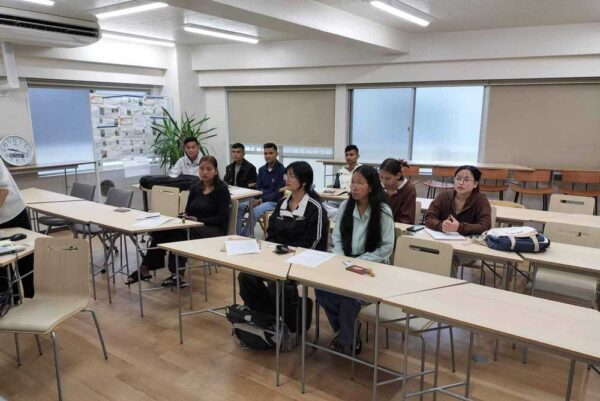
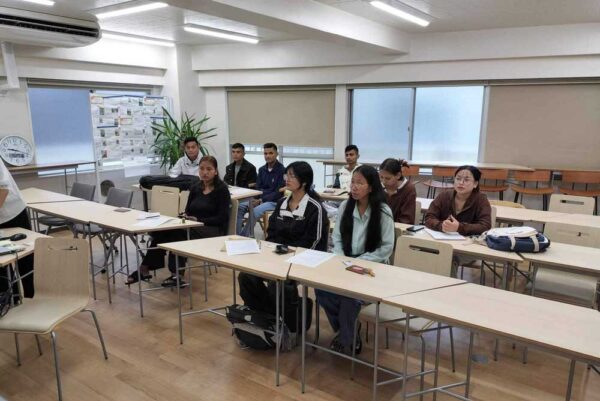
Most students begin their education by enrolling in Japanese language courses. This is a means of ensuring that one acquires communication skills and is ready for further study in Japan.
Undergraduate programmes can be applied to many majors, including engineering and technology, computer science or information technology, business management, international relations, and the environment.
These are practical and skill-based courses, aimed at making individuals employable. Courses that are popularly chosen are nursing/health care, automotive engineering, hospitality management, graphic design, robotics & electronics.
In addition, there are certain colleges and universities in Japan that offer programs where teaching is conducted in English. Programs in English are advised for students not know the Japanese language.
To study in Japan after 12th grade, candidates must meet the eligibility requirements set by Japanese universities and language/vocational institutes.
The candidate should have completed +2. The type of education can differ according to the subject of study chosen by the student; for example, science, management, or humanities.
There is a minimum requirement for academic scores, but the marks required differ from university to university and subjects of study.
The age criteria of an applicant normally range from 18 to 25 years old.
The evidence of financial ability would be presented in the form of a sponsor or account balance. This would enable the students to handle the cost of tuition and living expenses while studying in Japan.
The students would demonstrate their interest in learning Japanese in the majority of the courses. The knowledge of the language would serve as an asset.
Certain documents would be needed to facilitate the process of admission and visa.
The following list of documents needs to be submitted to establish your academic qualifications:
Documents that the candidate is required to provide personally are:
Financial documents are very important as they help you show your capability to pay your fees and living expenses in Japan.
Furthermore, as per the college, the following documents could be necessary:
The preparation of these documents will help you secure admission to the college as well as a student visa to Japan.
Japanese language is very important for study in Japan after 12th from Nepal.
Some subjects could be taught in English. Nevertheless, good knowledge of the Japanese language would be required in most cases.
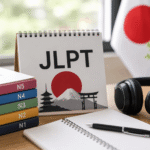
The Japanese Language Proficiency Test (JLPT) is one of the most popular Japanese language proficiency tests. Various levels are for various purposes.
JLPT N5 / N4
These are entry-level certifications required for getting into Japanese language schools. These tests will help students develop basic conversational skills that are necessary for surviving in Japan.
JLPT N3
This intermediate level of language learning is helpful for vocational education as well as employment. This will help the learner to speak confidently at educational and professional levels.
JLPT N2 / N1
The higher levels are better suited to study and work in Japan. Those with the JLPT N2 and N1 levels can easily learn and work in Japan.
Despite not having knowledge of the Japanese language, students begin by learning the language first. Knowledge of the Japanese language is an advantage in both study and work in Japan.
Understanding cost of studying in Japan for Nepali students is very important. This allows students and parents to make proper financial preparations in terms of tuition fees and living costs.
Tuition fees in Japan depend on the type of institution:
These fees might vary according to the institution.
In addition, students have to cover their monthly expenses during their studies in Japan:
The monthly expenses will differ according to the way of living and the location where the student lives.
Generally, the average annual fee required for studying in Japan is between NPR 8-15 lakhs. The amount of money needed may vary depending on the student’s lifestyle, the college’s location, and course choices.
Various scholarships can significantly reduce the cost of studying in Japan after 12th, including the government-funded MEXT scholarship, JASSO awards, and university-specific funding. See our complete guide to scholarships in Japan for Nepalese students for eligibility and how to apply for each.
The Japan student visa process for Nepali students includes:
The first thing that you need to do is select an appropriate Japanese language school or university depending on your career aspirations and educational aims.
Selecting the appropriate institution is very important as it will help with the further educational process and visa application.
Once you have chosen your university, you have to provide academic, personal, and financial documents.
Many students even seek assistance from consultancy firms to ensure that their application is properly done.
Once you have been accepted into the school, the school in Japan will apply for a Certificate of Eligibility (COE) for you.
A Certificate of Eligibility is an official document issued by the Japanese government that proves your eligibility to study in Japan.
Once the COE is accepted, you may proceed with applying for a student visa at the Japanese Embassy in Nepal.
The other required supporting documents should be submitted along with it.
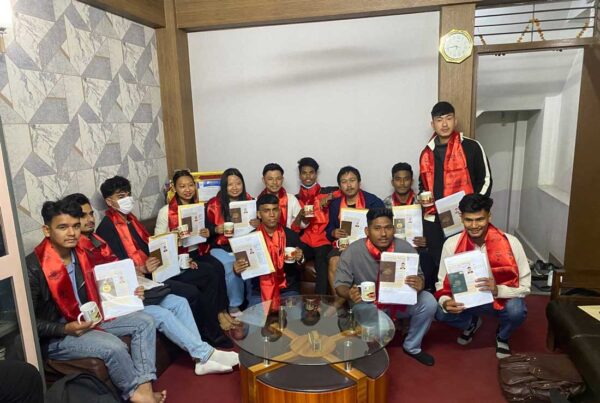
Once your visa has been processed successfully, you can then start making preparations for your departure to Japan. This will involve looking for a place where to stay, participating in the pre-departure orientation, and travelling to Japan to commence your studies.
Taking the above measures will significantly raise your chances of obtaining your student visa and joining your studies in Japan after 12th journey.
The completion of your studies in Japan is certain to offer you many options in terms of career development in Japan as well as around the world because Japan has a strong economy and industries and also requires many professionals in various fields.
Graduates can seek job prospects in many industries depending on their qualifications and skills, which include:
With the proper qualifications and knowledge of the Japanese language, graduates have the potential to create a great career in some of the most reputed firms of the world.
A Japanese education is greatly respected by international employers. Once you finish your education, you will have the opportunity to work in one of these fields:
The experience and skills that one acquires through their education in Japan is very advantageous in the current job market environment.
Japan also provides diverse ways through which skilled individuals can continue to work after completing their studies. This makes Japan a very good choice for both study and work because the graduate could be able to get a work visa and stay in Japan.
Students often experience rejection or a delay in their study in Japan after 12th journey, due to some minor errors that can be avoided.
Lack of or incorrect documentation may cause problems in the approval process of your application. Always ensure that all the academic, personal and financial documents are complete.
Inadequate bank statements or sponsorship information can cause problems during the visa process. Good and genuine financial proof is necessary.
An inadequate SOP will minimize your chances of getting admitted. The SOP needs to contain your purpose of studying in Japan.
Learning even basic Japanese will be useful in studying, in life, and while working. Failure to prepare oneself with language knowledge may cause problems.
Selecting the wrong consultancy may cause you to make errors when applying. It is always best to select a good one with experience.
By avoiding the above-mentioned mistakes, you stand a higher chance of succeeding in Japan.
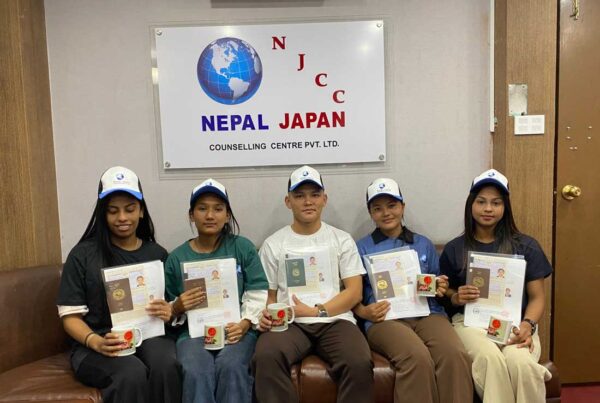
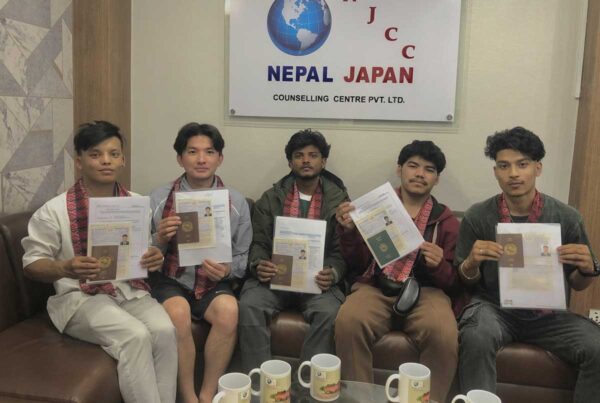
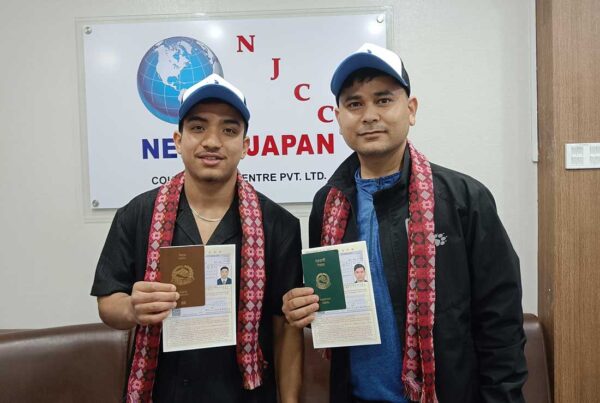
NJCC (Nepal Japan Consultancy Centre Pvt. Ltd.) is a trusted consultancy that guides Nepali students to study in Japan after 12th. It provides full support from counseling to visa processing.
Choosing to study in Japan after 12th is one of the best decisions for students who want a global career, practical learning experience, and long-term growth opportunities. Japan offers a strong education system, advanced technology, and a safe environment that helps students build a successful future.
With proper planning, Japanese language preparation, and the right guidance, studying in Japan can be a life-changing opportunity for Nepali students. The journey becomes much easier when you follow the correct process and avoid common mistakes.
If you are serious about your future, start preparing early and take expert guidance from NJCC (Nepal Japan Consultancy Centre Pvt. Ltd.). NJCC provides complete support from counseling to visa processing, helping you achieve your dream of studying in Japan smoothly and successfully.
Contact NJCC today and take the first step toward your study in Japan journey!
Yes, students of Nepal can pursue their studies in Japan after graduating from 12th grade. They can join language schools, vocational colleges, or universities according to their qualifications and preferences.
In general, all of them require at least some basic understanding of the Japanese language. But first, one needs to go through a language course in a Japanese language school.
IELTS/TOEFL test is not necessary for the majority of courses in Japanese language and vocational programs. But it could be compulsory for English-medium universities in Japan.
Average cost ranges from NPR 8-15 lakhs annually, which includes tuition cost and living cost. The actual cost varies according to location, course, and individual lifestyle.
Yes, students from abroad have the option to work on a part-time basis up to 28 hours each week during their period of study.
Some of the popular courses are IT, Engineering, Business Management, Nursing, Hotel Management, and many others.
Students need to be enrolled in a Japanese institution and obtain the Certificate of Eligibility (COE). After that, they may apply for the student visa in the Japanese Embassy of Nepal.
Yes, Japan is considered one of the safest countries in the world, with low crime rates and a disciplined society, making it ideal for international students.