📞 01-4965681, 01-4965713 | ✉ injcc12012@gmail.com

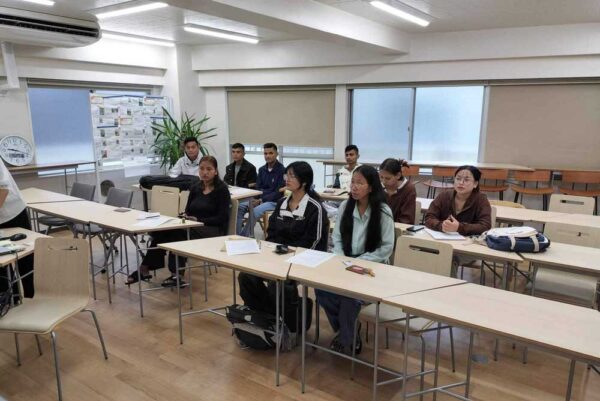
Studying in Japan from Nepal is a big dream for many Nepali students. But it costs money. The cost of tuition, rent, food and flights quickly adds up. A scholarship can fill that gap. It can make a dream seem attainable.
Scholarships are not a lottery. You must choose the right one to your level and field. They must be applied correctly on the appropriate papers. But you have to make the deadline, as most scholarships only take applications once a year.
NJCC has assisted more than 1,000 students in studying in Japan since 2012. That includes support for MEXT, JASSO, university scholarships and more. This guide will tell you what is available, how it works, and how to put yourself in the best position.
The scholarship is a crucial factor in determining whether or not you choose to study in Japan. Without one, tuition and living costs can push the whole plan out of reach. Here’s what goes wrong when students apply alone, without guidance:
These errors are identified early through good guidance. Before you submit. Not after receiving a rejection letter.
Japan offers several kinds of financial help for international students. Here’s how they compare:
| Scholarship | What It Covers | Best For | How Hard to Get |
| MEXT (Monbukagakusho) | Full tuition, a monthly stipend (¥117,000 for undergrads; ¥143,000–¥145,000 for Master’s, PhD, and research students), and a round-trip flight | Undergrad, Master’s, PhD, and research students | Very hard |
| JASSO | A monthly stipend only (¥48,000–¥80,000). No tuition help | Students who already got into a university | Hard |
| University Scholarships | Partial or full tuition waiver | Students with strong grades | Medium to hard |
| Private Foundation Scholarships | Varies. Often ¥50,000–¥150,000 a month | Students in specific fields, like engineering or business | Medium |
| Local Government Scholarships | Varies by region | Students applying to schools in that region | Medium |
| Tuition Fee Exemptions | 30% to 100% off tuition | Students with financial need and good grades | Medium |
For most Nepali students, MEXT is the best option. It covers the most and carries the most prestige. But it’s also the hardest to get, and it asks for the most paperwork. If MEXT doesn’t work out, JASSO and university waivers are strong backup options, and many students combine a tuition waiver with a JASSO stipend to cover most of their costs.
Understanding the cost helps you see why a scholarship matters so much.
If you add it up over a complete degree, you will make a large number. The MEXT scholarship alone can be valued at several million yen, when the costs of tuition, a living allowance and flights are added up. This is the actual reason why it is worth the effort to write an effective application.
You can apply for MEXT in two ways. Which one fits you depends on your grades, your goals, and your timeline.
Embassy Route
The application is made through the Embassy of Japan in Nepal. The period for this application process runs from April to June each year for admission the following year. The Embassy decides on the specific period for this each year, so it might be worthwhile checking out earlier. You will have to go through documentation checking, some written tests, and interviews. This method attracts many candidates, but it also has more seats.
University Route
You apply directly to the Japanese university. The university selects those students whom they want to nominate to MEXT. The deadlines vary from university to university, and they occur much earlier than the embassy option. Fewer students opt for this route, but you will require your application to be chosen by the university, which requires you to have a strong profile for this particular university.
The counsellors at NJCC will assist you in choosing the appropriate route for your profile and will help you with all aspects, like documents, application review, and the interview, whichever route you choose.
Here is a general idea of how the process goes when applying for the embassy:
Because this stretches out over most of a year, starting early gives you the most room to prepare a strong application instead of a rushed one.
1. We Match You to the Right Scholarship
We consider your grades, area of specialization, and level of studies. As a result, we provide you with a list of scholarships that are relevant to you.
2. We Help With Your Documents
Each scholarship has requirements to submit certain documents – transcripts, recommendation letters, academic plans, and financial documents. We assist you in preparing all required documents and formatting them according to the requirements of each scholarship separately.
3. We Review Your Application
Our counsellors will check your application before submitting it. Thus, our experts will be able to find out the mistakes, missing documents, and other gaps that may harm your application.
4. We Prep You for the Interview
If your scholarship application requires interviews, which includes MEXT, we will conduct mock interviews with you. We will help you provide straightforward and sincere answers regarding your plans and objectives.
5. We Stay With You After You Apply
We will assist you in getting through your results, your visa requirements, and your preparation for travelling to Japan. Obtaining the scholarship is just the beginning.
Our advisors specialize in providing scholarship information about Japan only. This means no generic information about studying abroad in ten different countries. They know how to fill out the necessary forms. They know the interview process. They know the criteria of the MEXT, JASSO, and university review committees. The specialization leads to fewer errors in filling out the application forms and understanding your actual probability of being awarded the scholarship.
The NJCC has been operating in this field since 2012. Providing assistance for scholarships has always been one of our services, not something that was introduced in our portfolio at some later date.
MEXT is not awarded to all high-performing students. It is one of the most competitive scholarships in the world, and getting rejected does not say anything about you. There are alternative ways out for you if this happens:
We help students plan for all of these paths, not just the scholarship route, so a single result doesn’t end the whole plan.
The MEXT Scholarship is the most popular fully funded scholarship in Japan for international students. It includes the tuition fees, monthly allowance, and airfare. Having good grades, submitting a properly completed application, and submitting it on time increase the likelihood. NJCC assists students in identifying and applying for scholarships.
A 100% scholarship covers tuition fees and, in some cases, living expenses. To qualify, maintain good academic performance, prepare your documents carefully, and apply before the deadline. Starting your preparation 6–12 months in advance gives you a better chance of success.
Not always. Many MEXT programs taught in English do not require IELTS, but some universities may ask for proof of English proficiency. Requirements vary by institution and program.
Eligibility will vary depending on the scholarship. But almost all scholarships require a good academic record and the educational qualifications for your desired course.
Yes, MEXT Scholarship is very competitive. But numerous Nepali students obtain this scholarship every year by submitting an excellent application along with strong academic or research objectives.
The maximum age differs according to the scholarship program; some may be undergraduate, while others are for research.
Many national, public, and private universities in Japan offer scholarships or tuition fee waivers for international students. Scholarship availability varies by university and program.
It is best to start preparing 6–12 months before your intended intake. Since scholarship deadlines vary, beginning early gives you enough time to prepare a strong application and submit all required documents.
Deadlines are strict. Application windows are short, and most only come once a year. The sooner you start, the stronger your application, and the more time you have to fix weak spots before you submit.