📞 01-4965681, 01-4965713 | ✉ injcc12012@gmail.com


When you are seeking a Japanese language institute near me, you are doing more than learning a new language; you are embarking on a journey towards something much larger. In Nepal, when students start this search, they usually have a definite objective in their minds: to pursue studies, gain employment, and create a bright future for themselves in Japan.
Japan is now the dream destination for many Nepalese students because of the high-quality education, discipline, advanced technology, and lucrative career prospects available there. For those students eager to explore and develop themselves internationally, there are countless options in Japan.
However, before stepping into Japan, there is one essential requirement that every student must fulfill:
Japanese language proficiency
When language skills are lacking, it becomes increasingly challenging to study, communicate, and acclimate to life in Japan. This is the reason why picking out the best Japanese language institute near you is of vital importance for any serious traveler to Japan.
Japan is quite distinct from many other countries where English is spoken in academic settings. Communication in most colleges, technical schools, work environments, and even social settings happens mostly in Japanese.
The lack of language proficiency can pose numerous difficulties for international students in Japan.
Because of these challenges, learning Japanese is not just helpful, it is essential.
In fact, for anyone planning to study or work in Japan, Japanese language proficiency is a mandatory requirement for success, not an optional skill.
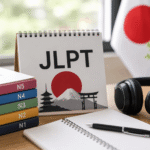
Most students intending on studying or working in Japan have to appear for the Japanese Language Proficiency Test (JLPT). It is one of the most crucial standards employed in measuring proficiency in the Japanese language.
The JLPT has wide recognition amongst all the institutions of learning in Japan and even potential employers, hence an indispensable test for any person looking towards a future in Japan.
The JLPT consists of five levels, starting from beginner to advanced learners:
The Japanese Language Proficiency Test assesses students’ general ability in certain critical domains, such as:
These are some of the necessary skills needed to succeed academically and communicate effectively in Japan.
For many students coming from Nepal, the level that they need to achieve before heading to Japan will be either N4 or N3, based on the course and institutions they have selected.
Reaching the appropriate JLPT level not only guarantees their admission but also ensures a smooth transition for them once they arrive in Japan.
While seeking a “Japanese language institute near me,” many learners commit the grave error of picking institutes just because they are close to their homes or charge lower tuition fees. A quality Japanese language institute is one that provides learners with goal-oriented courses that meet Japan’s standards.
The selection of the right institute is a key factor in helping you pass JLPT exams and applications for studies in Japan, as well as ensuring bright career prospects.
Below are the most crucial factors you need to consider every time:
The best Japanese language institute must offer students a systematic structure that helps them learn progressively.
This means that students learn through the following levels:
Failure to have a systematic structure makes it difficult for students to measure their progress, leading to poor performance in JLPT tests.
An effective institute needs to emphasize exam-based training programs that can prepare students for JLPT and NAT. It is crucial because students have to learn in Japan. Students need to be exposed to the following types of training:
The above-listed training programs enable students to feel confident when taking an exam.
One of the major problems Nepalese students encounter in Japan is the problem of a lack of speaking confidence.
A good institute must focus on developing practical speaking skills, such as:
This will enable students to adjust easily to life in Japan and be able to converse once they land in Japan.
Just knowing the language itself is not sufficient for success in Japan. The institute needs to offer a whole lot more than language training, such as:
This will ensure that the student is well-prepared from language learning to actual studying in Japan.
The quality of teachers greatly affects students’ acquisition of the language.
Selecting a reputable institution requires that it:
An experienced teacher can ensure you do not make unnecessary errors while saving time.
For those who intend to study in Japan, it is necessary to have a roadmap that will help achieve their objective. There is no quick way of learning the Japanese language and getting ready for Japan; it needs time and the right guidance.
The following roadmap will help you get started:
Begin your learning process with the basics of the Japanese language, such as:
This includes:
They are the primary components for comprehending the structure of the language.
After understanding the basic concepts, work towards structured learning to prepare for the Japanese Language Proficiency Test (JLPT).
In this phase, learners normally move forward from:
This helps build strong grammar, vocabulary, and reading skills.
After setting up a solid base, the next stage involves preparations for exams.
This involves:
Good preparation will help you reach the necessary JLPT level for Japan.
Once you achieve the required language level, the next step is selecting the right institution in Japan.
You can choose from:
Your selection will depend on your profession and academic ambitions.
Once the institution is chosen, then comes the application process, which involves:
Documenting accurately will ensure a streamlined approval process.
Before departure, it is important to prepare for real-life situations in Japan.
This includes learning:
This preparation helps students adapt quickly after arrival.
Many students looking for a Japanese language institute near me make certain decisions that could actually affect their future study plans in Japan. The following are some of the mistakes that one should avoid in order to achieve good results:
A typical mistake made by candidates while choosing an institute is picking one that has low fees. Although cost is crucial when considering an institution, very cheap courses may not be professionally managed or provide adequate materials and training.
A huge mistake made by many is joining an institute that doesn’t prepare its students for the JLPT test. Since the JLPT test is an essential component of any study program in Japan, one may have great difficulty succeeding without proper preparation.
The majority of students overlook verifying the institute’s reputation. There is no substitute for examining the performance history of past students in terms of their JLPT success rate and successful transition to Japan. It clearly demonstrates the institute’s capability.
Language alone is not enough. Japan guidance and counseling studies are compulsory when applying for the visa, collecting documents, and identifying the right institution. Otherwise, you will face difficulties in the future.
Japanese is an entirely different language and requires dedication to master. However, students often expect instant gratification, but dedication is necessary. Without regular practice, becoming fluent and passing the JLPT exam would be difficult.
In recent years, the demand for skilled employees in Japan has become even higher due to the aging population as well as the lack of laborers in particular sectors. In such circumstances, the ability to understand and communicate in Japanese becomes much more important than before for international students and professionals.
Fluency in language is no longer just an advantage but an essential thing for studying, working, and establishing one’s life in Japan.
In case a student has the capability to learn the Japanese language, there will be numerous opportunities available to him/her, such as:
Japanese language skills open doors to high-quality education in Japan, including:
These options will give you a chance to acquire international credentials in an advanced educational setup.
Japan provides a wide range of employment opportunities for people who are skillful and fluent in Japanese, including:
Proficiency in Japanese is an asset for securing a job and performing well on the job.
In addition to academic and job-related success, there are other advantages associated with the study of Japanese:
Such advantages make students more internationally-minded and flexible at work.
Many students believe that studying alone is sufficient for them to learn the Japanese language; however, one needs to know that formal training plays a huge role in achieving success in the JLPT test, as well as preparation to study in Japan.
Some of the advantages gained through a formal Japanese language school include:
However, in the absence of such formal training, many students end up facing problems even after extensive study due to a lack of concentration in their studies.
If you truly wish to get into a Japanese language institute near me, then your decision will affect the opportunities available to you in Japan. The choice of a suitable institute is not just a convenience issue but a factor that ensures you receive proper education and guidance.
Instead of making a random choice, it is important to focus on key factors such as structured Japanese courses, JLPT-focused preparation, regular speaking practice, proper guidance for studying in Japan, and experienced instructors who understand both the language and the exam system. These elements together build a strong foundation for your journey toward Japan.
Learning Japanese is not only about clearing exams but also involves mastering the abilities and gaining the knowledge needed to thrive in Japan. By following the correct procedure and putting in some effort, your goal of studying in Japan can definitely be accomplished.
Are you prepared to start your journey? Take the first step towards your goal of studying in Japan by following the proper procedure and receiving professional training.
Visit NJCC to find out more about Japanese language courses.
Japanese language courses in Nepal typically cost between NPR 15,000 and NPR 40,000 per course, depending on the institution, duration of the course, quality of teaching, and extra services like JLPT coaching.
Fundamental Japanese, like Hiragana, Katakana, and grammar, is easy to master within a couple of months. To become exam-prepared or attain JLPT proficiency, however, normally takes between two and six months, depending on your learning pace and technique.
Each exam fulfills its own purpose. In terms of acceptance in Japan, JLPT (Japanese Language Proficiency Test) enjoys more popularity than JFT (Japan Foundation Test for Basic Japanese). While JLPT is taken for further education or job opportunities, JFT serves the purpose of basic communication and certain visa requirements.
These are levels of the Japanese Language Proficiency Test (JLPT):
Japanese might appear difficult in the beginning because of the nature of the writing system and grammar. Nevertheless, with adequate training, it is possible for Nepalese learners to master the Japanese language easily.
Learning Japanese is important because most schools, workplaces, and daily life in Japan use the Japanese language. If you understand Japanese, it becomes easier to study, communicate with others, find jobs, and adjust to life in Japan.