📞 01-4965681, 01-4965713 | ✉ injcc12012@gmail.com

Japan is a top choice for education, work, culture, and living. Every year, thousands of citizens of Nepal apply for Japanese visas from Nepal to come and study, look for job opportunities, or meet their relatives living in Japan.
Although the desire to visit Japan is extremely high, the process of obtaining a Japanese visa is extremely detailed and has to be done with precision and accuracy.
It is here that a trusted Japanese consultancy in Nepal can assist you in this process with accuracy, precision, and expertise. Although there are numerous Japanese consultancies in Nepal, Nepal Japan Counselling Centre Pvt. Ltd. (NJCC) is one consultancy that stands out in this arena for its extremely high success rate, services offered, and commitment to students.
In this blog, we will be talking about how important it is to choose the right Japanese consultancy in Nepal and the kind of services that they offer. Additionally, we will also be talking about how you can obtain your Japan visa from Nepal.
Nepal is a new destination among Japanese students. Moreover, it is an appealing place to be for those professionals who want to find enhanced opportunities in the sphere of education and personal development.
Japan has been listed among the most popular immigrant destinations due to a number of reasons.
In the year 2023, the Ministry of Foreign Affairs of Japan reported that the country issued more than 4.1 million visas across the world, comprising student, work and internship visas. This indicates that the number of those willing to study, work, and venture into new opportunities in Japan is increasing.
However, there is more than filling out the forms that are required in the process of acquiring a Japan visa from Nepal. It is a complicated task which involves the following:
It is rather a difficult task when one is not aware of what requirements are linked with it.
Working with a Japanese consultancy in Nepal has a number of benefits. Among them is the fact that your Japan visa from Nepal will be done easily.
Working with a consultancy firm is easy and ensures that your Japan visa is successful.
There are various kinds of visas that are issued in Japan. These kinds of visas depend on your intentions for visiting Japan. They have student visas, work visas, training visas, and residence visas. This information is going to help you in making a decision on how to proceed, even before visiting any Japanese consultancy in Japan.
A student visa is the recommended visa for Nepalese students who wish to further their studies in Japan.
Using this visa, the applicant would be allowed to study in Japan on a full-time basis. In addition, the applicant would also be allowed to take up a part-time job
There are various types of work visas in Japan. The type of work visa varies based on the profession of the applicant.
A work visa gives an applicant an opportunity to stay in Japan for a long time, along with an opportunity for family members to accompany them.
The SSW Visa, which was first introduced in 2019, aims to fill in the gaps in the Japanese labor market.
The TITP Visa is for the transfer of skills and training in various industries in Japan.
The purpose of this visa is not for employment, but for learning.
There is a chance for the family to stay together with the visa holder in Japan.
Applying for a Japan visa in Nepal is a bit tricky, but with the help of the right consultancy, it is easy and hassle-free.
The first step in obtaining a visa for Japan is a profile evaluation. A consultancy firm will assess your profile based on:
After assessing your profile, it becomes clear which process is best for obtaining a visa in order to be successful in this regard.
Once your profile has been evaluated, the next course of action is:
The consultancy will ensure that you make a good selection in terms of your experience, qualifications, and ambitions.
The preparation of the documents is a vital step to ensure that there are no delays or rejections in the visa processing. These documents include:
The consultancies verify these documents for accuracy and adherence to Japanese immigration regulations.
A Certificate of Eligibility (COE) is an essential document that the Japan Immigration Services issues to validate your eligibility for a visa.
The COE is an essential factor in securing a visa since it is not possible to secure one without it.
Once the COE is obtained, the application for the visa is then made to the Japanese Embassy or Consulate.
This step is very crucial as it will assist in reducing the chances of the visa being rejected.
After the visa has been approved, your journey to Japan starts. Some of the steps in the pre-departure phase include:
Support services may be provided by some consultancies even after your arrival in Japan.
Not all consultancies offer such end-to-end services. A professional Japanese consultancy in Nepal will assist you in your entire journey, from beginning to end, and even after your arrival in Japan.
A good consultancy service will first assess your profile before charging any service fees. They will assess your eligibility, academic record, financial status, and future plans. This will help you choose the right visa for your needs by offering proper
Every student and every professional has different aspirations. Consultancy services develop a plan according to your needs. Students are directed to the appropriate schools or colleges. Professionals are directed to the appropriate job opportunities.
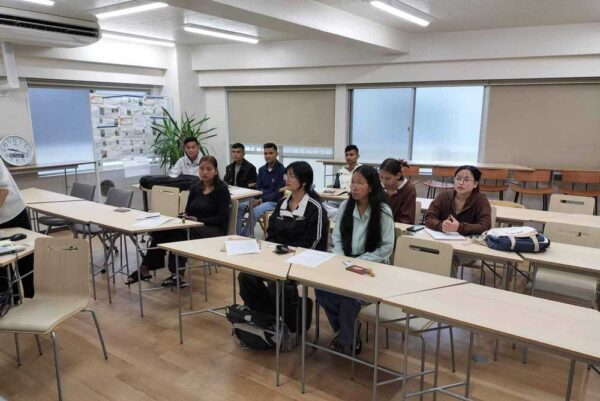
Language skills are necessary not just for visa approval but also for day-to-day life in Japan. Consultancies offer Japanese language training for Japanese language proficiency tests such as JLPT, NAT, and JFT.
Correct documents are very crucial for visa approval. Consultancies check your financial documents, academic certificates, and translations. They ensure that all your documents are correct and in line with embassy regulations.
The interview at the embassy is a crucial stage in obtaining a visa. Consultancies help you schedule appointments and prepare for your interview.
Not all consultancies end their relationship with you after obtaining a visa. Some offer support after you arrive in Japan. They help you find accommodation and airport pickup, and even find a part-time job. This is helpful in adapting to a new environment.
Generally, applicants from Nepal face a number of challenges when making their Japan visa applications. Some of the challenges faced by Nepalese While making their Japan visa applications include:
Professional consultancies help in avoiding such problems by offering quality checks on documents, templates, and mock interviews, thereby making the visa application process a success.
Obtaining a Japan visa from Nepal is a crucial milestone in the pathway to self-improvement, education, and success in one’s chosen career. However, the Japanese visa application process is a complicated and nerve-wracking experience if not done in the right way. But with the help of a reliable Japanese Consultancy in Nepal, the experience will be much easier and hassle-free. You will be able to avoid costly blunders, learn Japanese fluently, and increase your chances of getting the visa by working with the experts at NJCC, who will also be there to guide you once you land in Japan.
Your dream of study in Japan is now within your grasp. Take the first step today by contacting NJCC and get a free consultation with their experienced team, who can assist you in the process of applying for a Japan visa from Nepal and moving seamlessly into Japan.
The cost varies based on the level. The cost for learning from JLPT N5 and N4 is between NPR 8,000 and NPR 25,000. The cost for learning from JLPT N3 and N2 is between NPR 60,000 and NPR 150,000. Learning the Japanese language through consultancy services also includes guidance on how to obtain a visa.
The cost varies between NPR 1.5 lakh and NPR 3.5 lakh. The cost includes language learning (between NPR 30,000 and NPR 60,000), skill test (between NPR 5,000 and NPR 10,000), and consultancy services (between NPR 20,000 and NPR 80,000).
Yes, it is definitely possible to learn Japanese in 3-6 months for JLPT N5 and N4. Learning advanced levels takes between 6 months to 2 years for proper fluency.
The cost varies based on the services provided. The cost for basic guidance is between NPR 20,000. The cost for full services, including verification of documents, COE, interview, and others, is between NPR 80,000 or more.
The costs can also include consultancy charges ranging from NPR 20,000 to NPR 100,000, Japanese language classes ranging from NPR 60,000 to NPR 150,000, visa charges ranging from NPR 10,000 to NPR 20,000, airfare ranging from NPR 50,000 to NPR 80,000, and living expenses. This can add up to NPR 1.6 million to NPR 2.9 million for the first year.
Although Japanese language proficiency is not mandatory for every kind of Japanese visa, it is recommended because it increases the probability of approval. Japanese student visas do not necessarily require Japanese language proficiency. Japanese SSW visas require Japanese language proficiency at JLPT N4/N5 or JFT-Basic.
Yes, consultancies can assist you even after your arrival in Japan, as they can provide you with accommodation, airport pickup, cultural adaptation, and part-time job opportunities for students.
The easiest visa for Nepali citizens is the student visa, provided that a Japanese consultancy in Nepal guides you properly. Applying for a work visa and SSW visa is a bit more complicated.