📞 01-4965681, 01-4965713 | ✉ injcc12012@gmail.com

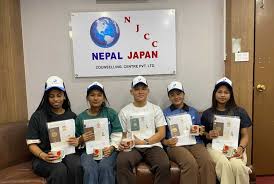
Japan has emerged as one of the rapidly developing destinations for Nepalese students because of its superior education system, safety, reasonable tuition fees, and good employment prospects after graduation. Every year, Japan receives a huge influx of foreign students, and Nepal is one of the developing countries contributing to these numbers in Asia.
However, studying in Japan is not just about admission. The most important part of the journey is completing the Japan student visa process from Nepal, which involves steps like COE approval, financial verification, and embassy procedures.
This guide explains in detail how to apply student visa for Japan from Nepal based on updated procedures and real requirements.
The Japan Student Visa is a type of visa offered by the Japanese Embassy in Nepal to permit foreign students to live and study in Japan during their course period.
They are able to study at language institutes, vocational colleges, or universities, reside in Japan lawfully, engage in part-time jobs, and prolong their stay based on their educational success.
But the Japan Student Visa can be obtained only if the COE certificate has already been approved.
Before submitting an application for a Japanese student visa, there are several important documents that each candidate should know about. The Certificate of Eligibility, known as COE, is one such document.
A Certificate of Eligibility is a legal certificate issued by the Immigration Services Agency of Japan that shows that you meet all the criteria to be in Japan.
The document is basically an approval before your student visa application at the Embassy of Japan in Nepal under the how to apply student visa for Japan from Nepal process.
After it has been released, the COE will be delivered to your school in Japan and thereafter to you for visa procedures.
The most important part in obtaining a Japan student visa is the COE since:
Indeed, COE is an indication that your visa application has been processed and you are eligible to enter Japan as a student.
Processing time of COE depends upon different factors like the university concerned and the volume of immigration, but normally:
Once the COE is issued, it is only valid for a certain period of time, and therefore, one must get the visa application done during that period.
The Japan student visa application process from Nepal is well-defined and should be strictly adhered to. The procedure is typically carried out in 6 major steps, beginning with choosing an educational institution up until obtaining your visa.
The first and foremost step in the how to apply student visa for Japan from Nepal journey is to pick out an appropriate institution and course in Japan. It plays a vital role in determining many aspects of your life.
The Nepalese students have the opportunity to enroll in the following categories:
Considerations when choosing schools or colleges in Japan include:
When you select a Japanese institution, you will have to apply for admission. This is necessary because the COE procedure begins only when you are admitted.
You must submit your complete application together with all required documents because Japanese institutions need to verify both the accuracy and the completeness of your application before they will grant you admission.
The application process requires candidates to submit the following documentation, which includes essential documents as stated below:
When your application is successful, the following will be considered by the organization:
If all the above conditions are satisfied, the university will approve your admission.
After having completed your evaluation, you will receive an:
Admission Letter (Offer Letter)
This is your letter of acceptance to the university. This is an important stage because:
The next step is to file an application for COE after getting accepted into a Japanese institution of higher learning by the Immigration Services Agency on your behalf.
This is a key part of how to apply student visa for Japan from Nepal, where your academic and financial background is verified.
Documentation required to acquire a COE includes the following:
The above-mentioned documentation is carefully scrutinized by immigration officials in Japan.
But one of the important requirements in COE is financial stability. According to this criterion, it should be clear whether the applicant can afford to pay for his tuition and other living expenses in Japan.
On average, the amount is expected to be around ¥2,000,000 (or NPR 18-20 lakhs).
Such an amount would be sufficient to support the applicant’s initial education and living expenses in Japan.
To boost the success rate of obtaining a COE, it would help to observe the following financial considerations:
STEP 4: COE Approval & Receiving Document
After evaluating and granting your application for immigration through the Japan Immigration Services Bureau, you will receive a Certificate of Eligibility (COE).
COE Approval and Delivery Procedure
This ensures a secure and verified transfer of documents through official channels.
Validity of the Certificate of Eligibility:
The COE certificate will be valid for three months after the date of issuance.
If you do not apply for your student visa within this period, then the COE will automatically expire, forcing you to repeat the entire procedure.
Now, upon receiving the COE, you may apply for your student visa at the Embassy of Japan in Nepal.
Your visa application can be done either through the Embassy of Japan in Kathmandu or through the authorized visa application center.
The Embassy of Japan strictly requires the submission of complete documents. An incomplete application form is never considered.
The duration for processing after submission is:
5 to 7 working days
Processing can be faster or slower based on the number of applications and other verification procedures.
Post-approval:
After arriving in Japan:
Among many aspects to be considered when applying for a student visa in Japan from Nepal, one of the main ones is the evidence of sufficient financial stability to ensure your study and living expenses. It is thoroughly reviewed by Japanese immigration officials because it demonstrates your capacity to complete the study program financially.
For most of the visa applications of students to Japan, the financial proof should lie within the below-given range of amounts.
¥2,000,000 (around NPR 18–20 lakhs)
The above-given amount is generally considered sufficient for the following purposes.
As per new visa requirements, the financial statement should reflect a consistent financial record rather than merely a one-off deposit.
The following are documents that the candidates must present to demonstrate their financial standing:
Most visa denials occur because of financial mistakes that could easily be prevented, like:
Most students from Nepal face difficulties when attempting to have their visa refused in Japan due to some avoidable mistakes. As a result of the strict immigration policies in Japan, such avoidable mistakes could affect the final verdict on whether you get your visa application denied or approved.
Here are some of the most common reasons for your visa being rejected in Japan:
If any educational qualification, financial proof, or application is incomplete, the application may be rejected.
Low or inconsistent balances, lack of income documentation, or unusually large transactions could raise an alarm.
Simple inaccuracies about personal information and inconsistencies in documentation could create issues.
Any false documents or inconsistent details can result in direct rejection.
An ineffective SOP that lacks clarity on study objectives might impact one’s application.
Without an authentic Certificate of Eligibility (COE), applications are rejected.
Here is a clear and structured timeline of the Japan student visa process from Nepal:
| Stage | Time Required | Description |
| Admission Process | 1–2 months | Select an educational institution, fill out the admission form, and receive a letter of admission |
| COE Processing | 1–3 months | An institution will apply for the COE in Japan, and its documents will be processed by the immigration authority. |
| Visa Processing | 5–7 working days | Submit a visa application at the Embassy of Japan in Kathmandu and wait for approval |
| Total Duration | 3–6 months | Complete end-to-end process from admission to visa approval |
When applying for a student visa in Japan, the most important thing is to ensure that you have done all the right preparations and submitted all the required documentation, since the Japanese government will do a thorough investigation using your financial and educational history.
Maintain a fixed balance in your bank account for some months. Try not to make any big deposits in your bank since the immigration authorities love their clean financial history.
SOP should explain your objective in undertaking study abroad, and also the rationale behind selecting Japan for your studies.
All documents should be authentic and consistent across all application forms. Otherwise, your application will be rejected.
Basic knowledge of the Japanese language reflects commitment and increases chances of selection and visa issuance.
Expert consultancy services ensure that proper documentation is maintained, the correct guidance is provided, and mistakes are avoided throughout the process.
Ensure that all your documents have been filed in order and you have not left out anything from your application.
The process of how to apply student visa for Japan from Nepal is structured and achievable when done correctly. From admission to COE approval and final visa stamping, every step must be carefully followed under the Japan student visa process from Nepal.
Once you receive the COE, you must prepare all your financial documentation before applying for your visa at the Embassy of Japan in Nepal. After getting the approval, it will be time to start your trip preparations for studying in Japan.
Learning the correct way to go about obtaining a student visa for studying in Japan from Nepal can be the first step to securing your future in academics and work life.
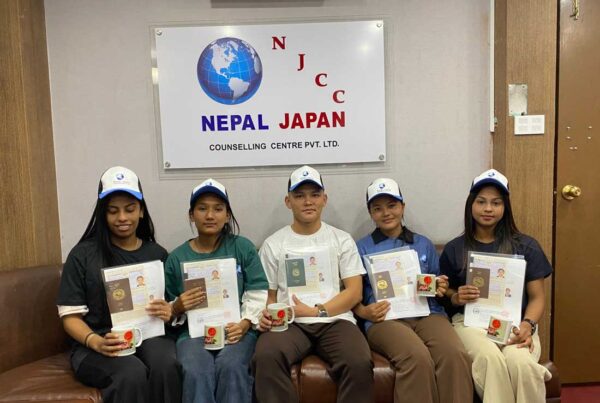
Wanting to study in Japan? NJCC offers comprehensive advice, from selecting the best educational institutions to getting your visa approved. Contact us now to begin your journey.
Total expenditure may go up to NPR 8-12 lakhs in the first year itself. In addition to that, one also needs to furnish evidence of financial stability of around ¥2,000,000 (NPR 18-20 lakhs).
Most institutions have a minimum GPA requirement of 2.0-2.5 (Second Division) in +2 or equivalent level, depending on the course and institution.
Yes, basic knowledge of the Japanese language is essential. All universities ha ave minimum requirement of JLPT N5 or above.
This whole procedure generally takes 3 to 6 months from admission to the COE and finally to the visa.
Yes, the students are allowed to work up to 28 hours a week while studying and up to 40 hours on vacations with proper authorization.
A Certificate of Eligibility (COE) is a document provided by the Japanese immigration department, making you eligible to apply for a visa to study in Japan.