📞 01-4965681, 01-4965713 | ✉ injcc12012@gmail.com


Japan is currently considered one of the most popular choices among Nepalese students and job aspirants, considering factors like quality education, job security, sophisticated technology, and a disciplined work environment.
As a result, a growing number of Nepali youths are choosing Japan as their career destination for both study and work purposes.
However, learning the Japanese language is a mandatory requirement before going to Japan, which has significantly increased the demand for the best Japanese language course in Nepal.
The best Japanese language course in Nepal not only helps students develop grammar and vocabulary skills but also prepares them for real-life communication, cultural interaction, and job prospects in Japan.
The study of Japanese is no longer a leisure activity; it has become an integral part of building one’s career. Nepal has been witnessing a fast-paced influx of students studying and working in Japan, which makes the Japanese language course in Nepal the most sought-after foreign language.
Japan has renowned universities and colleges. The following are reasons why most Nepalese students go to Japan:
For admission in Japan, basic knowledge of the Japanese language (JLPT N5 or N4) is necessary.
The need for foreign laborers has been increasing in Japan owing to the aging society there. Nepalese candidates may apply as follows:
Popular job sectors include:
Japanese language skills from a Japanese language course in Nepal are mandatory for these opportunities.
Even if students do not go to Japan, Japanese language skills open doors in:
Japan is recognized for its distinctive culture, dedication, and innovation. Studying the Japanese language course in Nepal will enable students to:
The best Japanese language course in Nepal aims at improving the communicative ability of students by focusing on four key elements: reading, writing, listening, and speaking. All these abilities are developed systematically so that the learners can communicate efficiently in their day-to-day life.
The majority of language schools in Nepal use the widely accepted Japanese Language Proficiency Test (JLPT) system, which is classified into five levels:
Beginners start by learning from the JLPT N5 level because that’s where the basics of the language can be taught. In this level, learners will be equipped with basic grammar, vocabulary, and writing skills.
The JLPT N5 is the first and most essential exam for all students studying the Japanese language. It is targeted at absolute beginners and individuals who are completely new to the language and wish to lay down a solid foundation of knowledge.
The four main categories that students must master in this stage include:
Learners are introduced to the Japanese scripts:
Students learn how to form simple sentences, including:
This level focuses on everyday useful words such as:
Students practice:
A Japanese language course in Nepal has been designed using a systematic and sequential approach, helping beginners to gain proficiency in reading, writing, listening, and speaking Japanese. Institutes generally adopt an international standard Japanese Language Proficiency Test (JLPT) system, ensuring systematic learning from basic to an advanced level.
This is the first stage for everyone who does not possess any information about the Japanese language. It will help build a strong foundation for them.
The purpose of this course is to make learners comprehend the fundamental Japanese language used in daily life and enable them to proceed to the next level.
After completing level N5, students move on to N4 to enhance their understanding and communication skills.
At this stage, students become more confident in handling simple real-life conversations.
The N3 level concentrates not only on fluency but also on the preparedness of the students in using the language in real-life situations within Japan.
This level bridges the gap between basic understanding and professional-level Japanese.
Selecting the best Japanese Language course in Nepal is not only about finding a course with good instruction but also proper guidance on how to learn Japanese. Selecting the best institution is one that equips you linguistically and personally for your future in Japan.
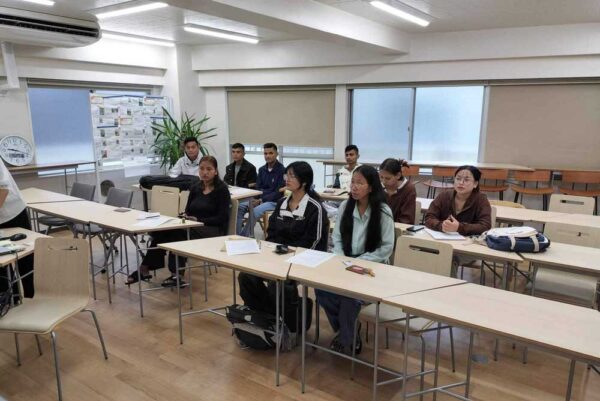
The institution should be equipped with competent and experienced instructors specialized in teaching the Japanese language. In addition, some have taken the JLPT exam, ensuring that the students get quality education on grammar, vocabulary, and pronunciation.
The structure of the class needs to be based on the Japanese Language Proficiency Test, which requires an increase in learning from level N5 upwards. Exercises and tests will help students prepare for the JLPT exams.
Speaking classes, discussions, and dialogues will ensure that the students become fluent. These will help the students feel confident enough to converse freely in real-life situations.
The mock test will be helpful for the students to understand the test pattern of the JLPT, and it will also help in improving their speed and accuracy.
The students also learn about the Japanese culture, etiquette, and manners. It will be helpful for them to adjust quickly while living and working in Japan.
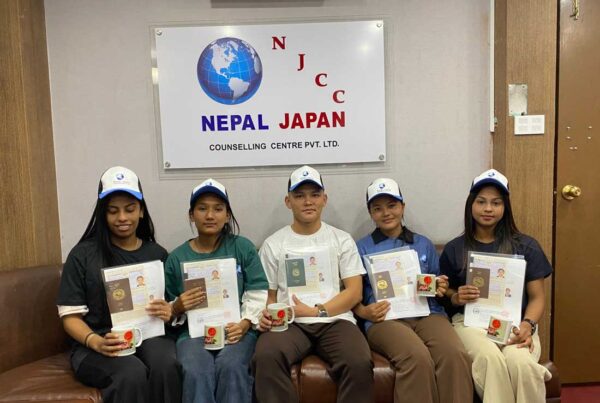
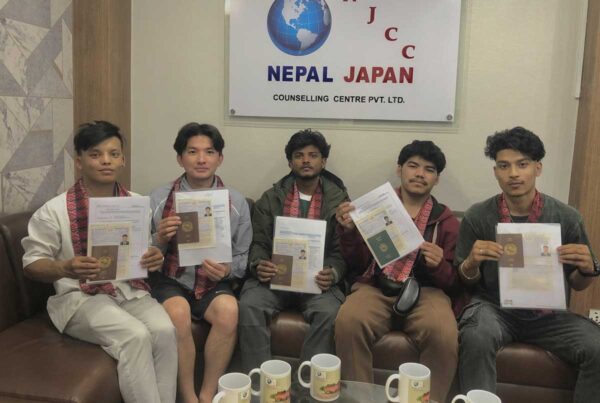
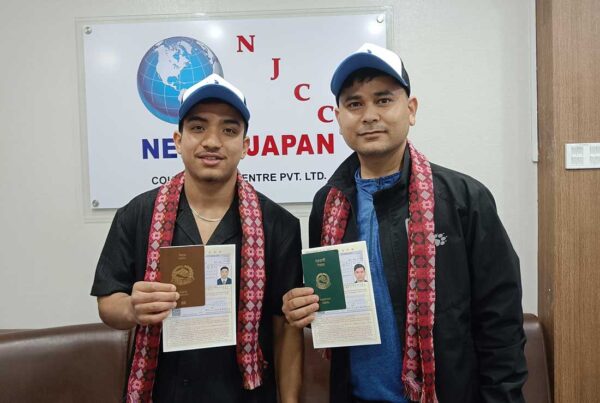
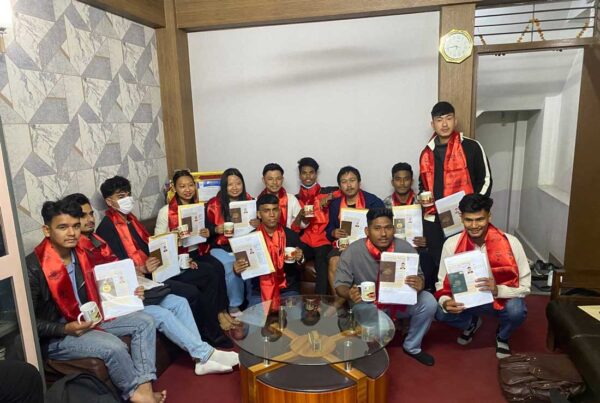
Organizations like NJCC provide career counseling, help with getting the visa, and carrying out interviews, thus making sure that the student’s future in Japan is mapped out.
Studying the Japanese language course in Nepal opens up various possibilities in the areas of employment and career in Japan as well as Nepal. Due to the increasing demand for the Japanese language, different options arise in terms of academics and career.
Students with the ability of beginner-level Japanese proficiency (N5 or N4 level) are qualified to join Japanese higher education institutes, including universities, colleges, and technical or vocational institutions. Scholarships are offered to foreign students in Japan, alongside language acquisition classes.
Japan needs many foreign workers to cater to their requirements of skilled and semi-skilled labor. The knowledge of Japanese is among the criteria that need to be fulfilled by students before applying for jobs in various fields, including nursing care, construction, manufacturing, tourism, agriculture, and hospitality industries.
Japanese fluency is equally valued in Nepal. Various Japanese companies, outsourcing firms, tourism companies, and international agencies employ Japanese-speaking individuals. Opportunities include those of translators, interpreters, call center executives, and administrative roles.
Having achieved a higher level of mastery (N3 and above), the learners will be able to teach Japanese at language centers as Japanese teachers. With an increasing number of Nepalese students considering studies in Japan, there is a growing demand for teachers in Nepal.
The individuals who specialize in the Japanese language can also become professional translators and interpreters. They may translate various papers and help in business meetings between the two nations as well.
Speaking the Japanese language would also open up job opportunities in freelance sites where one can offer services such as translating content, subtitling, and being a virtual assistant to Japanese clients from a distance.
The travel industry and airlines in Nepal prefer their workers who can speak Japanese because it helps serve the Japanese tourists and allows them to get better chances of promotion in their field of work.
Studying Japanese can be very enjoyable, but it may be difficult for the beginner because of its special construction and script.
Hiragana, Katakana, and Kanji are three Japanese alphabets. Although learning Hiragana and Katakana may be easy, Kanji may require effort, as there are numerous characters to memorize.
Sentence construction in Japanese is unique compared to Nepali and English languages, where the verb position is after the object.
Kanji and vocabulary require constant reviewing. One will easily forget what one has studied without consistent daily practice.
To learn Japanese effectively, students must adhere to some straightforward principles:
The Best Japanese language course for beginners in Nepal should include organized studies, JLPT training, and excellent communication practice.
Structured learning can help a learner create a foundation in grammar, vocabulary, reading, listening, and speaking in the language.
With the increasing opportunities in Japan, knowledge of Japanese becomes a crucial requirement for students as well as other individuals who wish to study or work there.
For fluent Japanese proficiency, the recommended method is to begin from the N5 level of the Japanese Language Proficiency Test and progress gradually from thereon.
Begin your Japanese language studies now with organized classes and practice.
NJCC provides Japanese language courses for students from beginner to advanced levels.
Begin learning Japanese from NJCC now and get closer to achieving your Japanese dreams.
The best Japanese course is the structured JLPT (Japanese Language Proficiency Test) course beginning from N5 level and gradually moving up from there (N4, N3). The ideal course must contain conversational practices, grammatical instructions, test preparation, and knowledge of the culture of Japan.
The JLPT (Japanese Language Proficiency Test) levels for assessing Japanese language proficiency are as follows:
N5 – Beginner level
N4 – Elementary level
N3 – Intermediate level
N2 – Advanced level
N1 – Most advanced level (close to native proficiency)
N5 is the least difficult, and N1 is the most difficult.
Both examinations are equally valuable, although their applications differ. The JLPT examination enjoys greater recognition and is utilized for education and learning purposes, while the JFT is used to obtain visas for working in Japan.
A period of 6 months to 1 year is normally required for learning from beginner to intermediate level (N5-N3), depending upon how many times you study per week.
Japanese is considered to be of medium difficulty since it has three types of writing (Hiragana, Katakana, Kanji) and a distinct grammar structure. However, with proper instruction and constant practice, this difficulty level will be reduced.
Yes, after one finishes learning the basic level of the Japanese language (N5/N4 level), one becomes eligible to pursue studies or work in Japan according to their visa eligibility.