📞 01-4965681, 01-4965713 | ✉ injcc12012@gmail.com

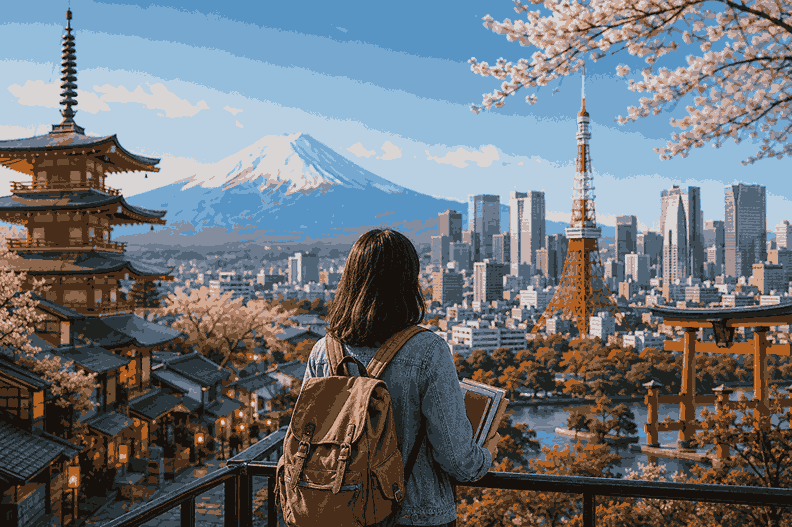
Selecting the best cities for foreign students in Japan depends on several factors, including budget, program selection, personal preferences, language fluency, educational institutions, and career goals. Every city presents its own benefits; thus, no one-size-fits-all answer exists.
Tokyo is ideal for work prospects and international experience, whereas cities such as Fukuoka, Sendai, and Sapporo are more budget-friendly and serene. On the other hand, Osaka, Yokohama, and Kyoto offer an equal blend of cost, culture, and opportunities, making them the best cities in Japan for international students and among the best places to study in Japan.
At NJCC (Nepal Japan Consulting Center), we help Nepali students choose the right city, course, and university based on their goals and budget. We support students who want to study in Japan from Nepal or apply for a Japan student visa from Nepal.
Selecting the best place to study in Japan will be easier if one compares these cities according to the criteria of cost, lifestyle, and job opportunities. Students looking for the best place to study in Japan should consider their budget, field of study, and future aspirations.
| City | Best For | Cost Level | Student Lifestyle |
| Tokyo | Career, networking, and top universities | High | Fast-paced and global |
| Osaka | Affordable city life, food, culture | Medium | Friendly and active |
| Kyoto | Culture, history, academics | Medium | Peaceful and student-focused |
| Fukuoka | Affordability and startups | Low–Medium | Relaxed and welcoming |
| Sapporo | Nature and lower living cost | Low–Medium | Calm and spacious |
| Sendai | Research and student life | Low–Medium | Green and affordable |
| Nagoya | Engineering and industry | Medium | Balanced and practical |
| Yokohama | International lifestyle near Tokyo | Medium–High | Modern and convenient |
| Kobe | Safety and lifestyle | Medium | Comfortable and international |
| Tsukuba | Research and innovation | Medium | Academic and focused |
After evaluating all these cities, the choice of the best cities for foreign students in Japan depends on budget and goals. Many students also compare Tokyo vs Osaka for international students before deciding.
If you are confused about which city is right for you, NJCC can help you choose the best option based on your study goals, budget, and future career plans.
Tokyo is one of the most preferred top cities for students in Japan because it offers top universities, career exposure, and global networking. It is often searched as Tokyo for international students and is considered the main hub for education and business.
Tokyo remains one of the best cities for foreign students in Japan for career growth.
Popular choices for studying include the University of Tokyo, Waseda University, Meiji University, and many language institutions. The living cost in Tokyo for students is around ¥120,000–¥180,000 per month. Jobs are common in restaurants and the retail industry.
Tokyo has great prospects for career development and networking, but the cost of living is high, and the pace of life is extremely fast.
Best for: Business, IT, language study, networking, part-time jobs, and career-focused students.
Osaka is an energetic and student-friendly city characterized by low costs of living and a food-centered lifestyle. It offers an attractive choice other than Tokyo to students seeking an urban experience at lower expenses.
Some top universities are Osaka University and Kansai University, in addition to some language schools. The living cost in Osaka for students is ¥90,000 to ¥140,000. Part-time jobs could be found in restaurants, shopping malls, and as customer service representatives.
Osaka is quite a favorable destination because of its low costs and great opportunities, but at the same time, it lacks many international organizations as opposed to Tokyo.
Best for: City life, part-time jobs, culture, and affordability.
Kyoto is known to be an elegant and traditional place, suitable for those interested in culture and studies. This quiet city ensures you get the most out of your time there, whether in terms of studying or relaxing.
Among the major organizations are Kyoto University and Doshisha University, as well as a number of language schools. The monthly cost of living averages at about ¥90,000-¥130,000.
There are also many part-time job opportunities that are mostly related to the tourist industry. However, Kyoto moves more slowly than bigger cities, so there are fewer job opportunities.
Best for: Japanese language, humanities, research, culture, and a peaceful student life.
Fukuoka is the most affordable city in Japan for students. The reason why Fukuoka offers a relaxed environment is that there is no dense infrastructure network.
The university and many language schools operate in this city. The monthly cost of living amounts to about ¥80,000 to ¥120,000. There is employment in shops and restaurants.
Although there are lesser job opportunities in Fukuoka than in Tokyo, it is the right place for individuals who prefer saving on expenses.
Best for: Budget students, startups, and relaxed city life.
The city is famous for its scenery, winter season, and serene surroundings. This city is perfect for students who desire a calm city.
This city has only one university, which is known as Hokkaido University. The monthly expense varies between ¥80,000 to ¥120,000. There are some part-time job opportunities in this city.
The main disadvantage of this city is the extremely cold weather in winters. Despite that, it offers a very serene and cost-effective environment for the students.
Best for: Nature lovers, peaceful living, and an affordable lifestyle.
Sendai is considered one of the best cities in Japan for students with excellent educational facilities. This is one of the most serene cities in comparison to other bustling cities, hence ideal for students.
Tohoku University, which is considered the finest university for research in Japan, is located in this city. Monthly expenditure for an individual is estimated to be between ¥80,000 to ¥120,000. Job prospects in Sendai are average.
The city offers a perfect balance between career and fun along with quality education.
Best for: Research students, graduates, and affordable student life.
Nagoya is a city that has great industries, engineering skills, and a car manufacturing industry. Good career opportunities for technically skilled persons await you here.
Many universities like Nagoya University and more and technical schools are common in this place. The cost of living is around ¥90,000 – ¥140,000. You can have employment chances in factories, sales, and service provision.
This place has an idealistic way of life than an international one.
Best for: Engineering, automobile, manufacturing, and technology careers.
Yokohama is a progressive city situated adjacent to Tokyo, which offers a perfect blend of life and access to opportunities in the capital city.
It boasts of good colleges like Yokohama National University and international studies. The cost per month in Yokohama is ¥100,000-¥150,000.
There are many part-time jobs because of its proximity to Tokyo.
It offers a convenient and modern lifestyle but is expensive.
Best for: Students wanting Tokyo access with balanced living.
Kobe offers safe and hygiene facilities along with international atmosphere and living environment suitable for the students.
The main university present at Kobe is Kobe University. Cost of living per month comes up to ¥90,000-¥140,000. Part-time jobs are available in smaller numbers.
Kobe is relatively quiet in comparison to other cities; however, Kobe a comfortable living environment.
Best for: Safety, comfort, and international exposure.
Tsukuba is called a city of science and research in Japan. This place would be ideal for any students who are keen on learning new technologies and gaining high-quality education.
The University of Tsukuba is the major educational institution based in this region. The cost of living per month varies from ¥80,000 to ¥130,000, whereas there are few part-time jobs available.
Tsukuba can be referred to as a highly academic and tranquil city without sufficient entertainment options.
Best for: Research, science, innovation, and graduate-level students.
The choice of the best cities for foreign students in Japan depends on your budget, study goals, and personal preferences. Each city has different advantages, so your decision should be based on what best suits your needs.
Choosing among the best cities for foreign students in Japan requires careful planning.
Cost of living is another factor considered in the choice of the city. This consists of such elements as housing cost, the cost of food, transport, and other essential things which differ from region to region within Japan. The city with the most expensive cost of living is Tokyo. It is an expensive place, while Fukuoka, Sendai, and Sapporo are less expensive.
The selection of the top cities for students in Japan will depend on the program, university, and future aspirations of the student. Big cities like Tokyo and Kyoto provide good universities where there is ample opportunity to study, while Nagoya and Sendai are famous for research work.
Part-time jobs are available in different cities. Big cities like Tokyo and Osaka will have many vacancies in the hospitality sector. Small cities may not have many vacancies, but small cities have low cost-of-living expenses, making them better for budgeting.
Not all Japanese cities welcome foreign students equally. Tokyo, Osaka, and Yokohama, for instance, have well-organized systems and student support services that assist foreign students with adjusting to the environment. Besides, there is adequate English language support. Small cities too provide similar assistance; however, because of the small size of the international community in such cities, it is necessary to select one where communication is easier.
Choosing a lifestyle completely relies on the surroundings one is in. For example, the capital features a bustling modern lifestyle, similarly for Osaka, only the difference being that it’s cheerful as well. On the other hand, Sapporo is cold in terms of its environment while Fukuoka is warm.
Career opportunities will also vary depending on which city you select. If you plan to work in large corporations, businesses, information technology, and multinational companies, then Tokyo is your best bet. On the other hand, if you want to pursue a career in manufacturing, automobiles, and the engineering industries, then Nagoya is the city for you. Fukuoka is now gaining momentum in terms of startups and entrepreneurship.
Cost of living in Japan will vary depending on the city you choose in Japan. For instance, the cost of living will be high in places like Tokyo due to expensive rent and high transport costs; on the other hand, the cost of living will be relatively cheap in places like Fukuoka, Sendai, and Sapporo. It is important that you choose the right city.
Here under is a quick cost comparison based on the average monthly costs for each city of Japan famous among students. This data has been collected through estimation and can vary depending upon different preferences.
| City | Monthly Rent Estimate | Overall Cost | Notes |
| Tokyo | Higher | Expensive | Best opportunities but highest cost |
| Osaka | Medium | Moderate | More affordable than Tokyo |
| Kyoto | Medium | Moderate | Student-friendly but tourist-heavy |
| Fukuoka | Lower | Affordable | Good balance of cost and lifestyle |
| Sapporo | Lower | Affordable | Lower rent, colder climate |
| Sendai | Lower | Affordable | Good for research students |
| Nagoya | Medium | Moderate | Strong industry connection |
| Yokohama | Medium–High | Moderate to High | Close to Tokyo |
| Kobe | Medium | Moderate | International and comfortable |
| Tsukuba | Medium | Moderate | Academic and research-focused environment |
The costs of living will differ based on the period and decisions made by the individual. It is advisable for students to consider these costs estimates when selecting a specific city.
Each student will have unique objectives, so each student will have his/her own ideal city in Japan. According to personal development, affordability, or preference for lifestyle, a student will pick a city that matches these objectives.
The chart below will help students identify the best cities for foreign students in Japan.
| Student Type | Best City |
| Best for career opportunities | Tokyo |
| Best for affordable living | Fukuoka, Sendai, Sapporo |
| Best for cultural experience | Kyoto |
| Best for engineering students | Nagoya, Tsukuba |
| Best for research students | Sendai, Tsukuba, Kyoto |
| Best for part-time jobs | Tokyo, Osaka, Yokohama |
| Best for a peaceful student life | Sendai, Sapporo, Tsukuba |
| Best for Nepali students on a budget | Fukuoka, Osaka, Sendai |
This simple comparison enables the students to know which city suits their needs, finances, and personal life. Each student will have different scenarios; therefore, it should be noted that choosing a city should not just depend on how popular it is.
For the students who study in Japan from Nepal, selecting the appropriate city is important as per their budget, the courses they want to pursue, their fluency in the Japanese language, and ultimately their career plans for the future.
Fukuoka, Sendai, and Sapporo are among the least expensive places for students from Nepal. In these cities, rent is comparatively cheap, daily living costs are low, and life is tranquil, which makes them ideal for budget-conscious students.
Tokyo and Osaka offer the most chances for part-time work. Yokohama, in turn, enjoys the advantage of being close to Tokyo. These cities are perfect for those who desire to earn more money alongside their studies, but they come at a price.
Tokyo, Osaka, and Yokohama have larger international student populations and support infrastructures, making it more comfortable for students there to settle down, speak their minds, and receive help from various student service offices.
Japanese language proficiency becomes extremely important for students from Nepal studying in various cities. While some universities provide English-language courses, in order to cope with daily life in the city, work, and career development in Japan, it is necessary to be proficient in the Japanese language.
Students need to first plan their budgets carefully, taking into account factors such as tuition costs, rent, transportation, food, and miscellaneous expenses. Tokyo is the most expensive city, while Fukuoka and Sendai are some of the cheaper cities in Japan.
Various Japanese Universities offer scholarships and financial assistance programs to international students. It is important to select a university depending on the eligibility criteria and available financial assistance to cut down the expenses involved in education.
Visa arrangements and documentation play an important role in ensuring success on the study trip. It is crucial to complete everything before applying for the visa to prevent any problems with approval.
Nepalese students would benefit from choosing Osaka and Tokyo for work experience, whereas those planning to live on a tight budget might consider Fukuoka, Sendai, or Sapporo.
Nepal Japan Consulting Center (NJCC) offers total assistance for students wanting to pursue their studies in Japan. Be it the selection of courses and colleges or preparation for leaving and living in Japan, everything about your education is taken care of by NJCC.
We aim to ensure that everything is easy and well-planned for our clients so they can concentrate fully on their studies and future careers.
We guide students in finding the correct university, college or language institution to attend according to the academic history, finances, and future career aspirations of each individual student.
We assist students in selecting suitable Japanese language courses that are essential for admission, communication, and daily life in Japan.
We help students gather information on scholarships available in Japan and make use of them to lower the cost of studies.
We help our students navigate through the entire process involved in obtaining a student visa, right from document submission to embassy procedures.
We conduct thorough pre-departure orientation sessions for our students that cover all aspects of Japanese living.
We help students find secure accommodation in Japan, along with assisting in airport pickup services for a hassle-free arrival process.
Selecting a suitable city in Japan is a crucial choice that will impact your academic journey, living expenses, work chances, and career development. Proper guidance helps students select the best cities for foreign students in Japan based on their goals and budget.
Students will find it easier to navigate through the process with some planning and professional assistance.
If you are planning to study in Japan from Nepal, Nepal Japan Counselling Center can help you choose the right city, course, college, and study pathway. Book a free counselling session today and start your journey with confidence.
Some of the best cities for foreign students in Japan include Tokyo, Osaka, Kyoto, Fukuoka, Sendai, Sapporo, Nagoya, Yokohama, Kobe, and Tsukuba. Tokyo is the best place for career development, whereas Fukuoka, Sendai, and Sapporo offer cheaper living conditions for students.
Students from Nepal can find it easier to take up part-time jobs in Tokyo and Osaka but will find it easier to save money in Fukuoka, Sendai, and Sapporo.
Yes, Tokyo is perfect for foreign students because it has great universities, global connections, part-time employment chances, and great career possibilities. However, the high cost of living must be taken into consideration.
Overall, Osaka is known to be cheaper compared to Tokyo while also providing a good student lifestyle, temporary jobs, and culture.
Cities like Fukuoka, Sendai, and Sapporo are generally seen as cheaper than cities like Tokyo and Yokohama.
Yes, foreign students have the opportunity to work part-time in Japan with the necessary authorization.
Some programs may be available in English, but Japanese language skills are very helpful for daily life, part-time jobs, communication, and long-term career growth in Japan.