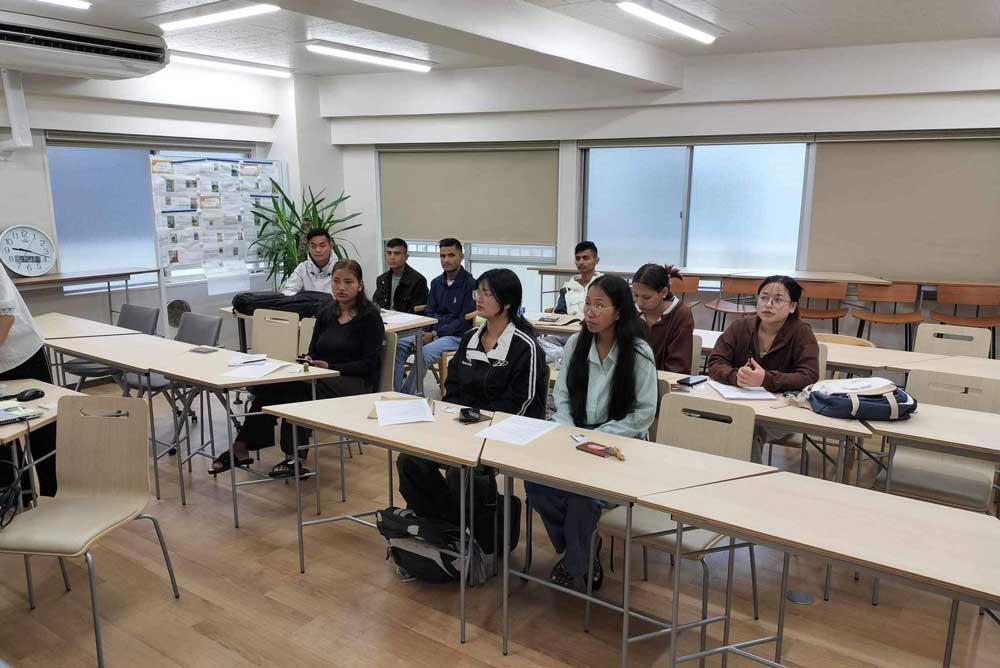
Japan is a top study destination for Nepali students because of its top universities, advanced technology, and a secure environment. In addition, the country has a rich culture and various scholarship opportunities, making it the best place to pursue education and future career opportunities.
In 2025, more than 435,000 international students enrolled in Japan, underscoring Japan’s global popularity. Tuition and living costs are lower than in Western countries. Scholarships such as MEXT, JASSO, or university/private scholarships can help cut costs. Students are offered the opportunity to work part-time, up to 28 hours per week, to gain work experience.
Anyone who wants to study in Japan needs to know about the universities, courses, costs, scholarships, visas, and work options in Japan for international students in 2026.
Nepalese students prefer Japan because it is a safe place to live and offers a high-quality education at a low cost. Japan provides a special combination of modern living and rich cultural heritage, and this allows students to experience innovation and traditional heritage in their daily lives.
Some of the best colleges in the world are in Japan. These include the University of Tokyo, Kyoto University, and Osaka University. Compared to many Western countries, the cost of schooling is pretty low, and students can work or stay in Japan after they finish school. The rising popularity of Japan among international students in 2025 is a result of its quality education, safe environment, and exciting opportunities for global careers.
Japan hosts numerous globally recognized universities with a high standard of education and the latest infrastructure. Students from Nepal can study in Japan for engineering, management, medical, and science courses at these universities.
For Nepalese students who wish to pursue higher education in Japan in 2026, there are a number of top universities in Japan to choose from. These universities are recognized globally for their quality education and support services offered to international students.
| University | QS Ranking | Popular Programs | Location |
| University of Tokyo | 36 | Engineering, Economics, Law, Science, Medicine | Tokyo, Japan |
| Kyoto University | 52 | Engineering, Biological Sciences, Energy Sciences, Economics, Agriculture | Kyoto, Japan |
| Tokyo Institute of Technology | 85 | Engineering & Technology, Computer Science, Materials Science, Physics | Tokyo, Japan |
| Osaka University | 91 | Engineering, Medicine & Healthcare, Life Sciences, Social Sciences | Osaka City, Japan |
| Tohoku University | 109 | Engineering, Science, Materials Science, Medicine | Sendai City, Japan |
| Nagoya University | 164 | Science, Engineering, Economics, International Studies | Nagoya, Japan |
| Hokkaido University | 170 | Agriculture, Environmental Science, Biology, Engineering | Sapporo, Japan |
| Kyushu University | 170 | Engineering, Business & Management, Medical Sciences | Fukuoka City, Japan |
| Waseda University | 196 | Business Administration, International Relations, Political Science, Computer Science | Tokyo, Japan |
| Keio University | 215 | Economics, Business, Media Studies, Policy Studies | Tokyo, Japan |
| University of Tsukuba | 350 | Science, Engineering, Education, Data Science | Tsukuba City, Japan |
| Hiroshima University | 480 | Engineering, Medicine, Education, Sciences | Higashihiroshima City, Japan |
| Kobe University | 482 | Economics, Law, Humanities, Social Sciences | Kobe City, Japan |
| Hitotsubashi University | 553 | Business, Economics, Social Sciences, Commerce | Tokyo, Japan |
These universities offer strong academics. They also provide scholarships, part-time employment, and employment after completion of studies to International students.
Japanese schools offer courses in technology, management, healthcare, and hospitality. They give International students education and work experience while studying in Japan from Nepal.
Engineering is very popular in Japan, famous for robotics and innovation. Subjects include mechanical, electrical, civil, automotive, and robotics engineering. Students are taught theory and skills. They can work in design, project management, robotics, and infrastructure. The Engineer/Specialist visa allows them to remain in Japan after completion of studies.
IT and AI courses are in great demand in Japan because of the growth in the digital sector. The courses taught to the students include computer science, AI, data science, cybersecurity, and software engineering. The students get practical experience in projects and exposure to the industry. The job opportunities available to the students include software developer, data scientist, AI engineer, and cybersecurity analyst. Such professionals are in great demand in Tokyo, Osaka, and other tech cities.
Business and management courses in Japan include international business, marketing, finance, and entrepreneurship. The courses are designed to equip students with knowledge on global economies and to prepare them for the job market. The courses provided include case studies, internships, and leadership development. Students who have pursued business and management courses can work as business analysts, finance specialists, consultants, or company managers. Japan’s economic ties with Asia make the job market even more attractive.
Healthcare and nursing programs are in demand in Japan. Courses include nursing, public health, biomedical sciences, and healthcare management. Students get both training and research experience. Graduates can work as nurses, healthcare coordinators, or rehab specialists. Many employers hire international students.
Japan’s tourism and hospitality sectors are growing rapidly. Programs cover hotel management, tourism, event planning, and customer service skills. Students often do internships in hotels, resorts, and travel companies. This helps them get jobs as hotel managers, tour coordinators, or tourism consultants.
Studying Japanese enhances language abilities and familiarity with the culture. Courses vary from beginner to advanced levels, encompassing cultural studies. Career opportunities for language majors include interpretation, translation, teaching, and international business. Advanced levels of JLPT proficiency increase employment prospects.
Nepali students must meet academic, language, and financial requirements to study in Japan from Nepal. Having the right documents and meeting requirements makes applying easier.
The transcripts and certificates of the previous education must be submitted. Undergraduates require 10+2 certificates, and postgraduates require a bachelor’s degree with transcripts. The documents should be in English or Japanese.
Usually, undergraduates need 2.8-3.5, while master’s students need 3.0 and above, but some top programs require higher grades.
A passport is required for admission as well as visa approval. It should be valid for at least six months after your intended entry into Japan. Students need to send a clear passport copy with their university and visa applications.
You need to show you have enough money to pay for tuition and living costs in Japan. Generally, proof of funds equivalent to JPY 1,500,000–2,500,000 per year (approx. NPR 15–25 lakh) is required, depending on your city of study and program level. This proof can be bank statements, sponsor documents, income certificates, or scholarship letters.
A Statement of Purpose (SOP) shows why you want to study in Japan and what your career goals are. A well-written Statement of Purpose plays a vital role in helping the university understand your enthusiasm and dedication.
Usually, most colleges ask for 2 to 3 academic recommendation letters from mentors, teachers, or employers. The letters should reflect your academic abilities, personal qualities, and potential for success. Letters that are not in English or Japanese need to be translated and certified.
Knowing Japanese is important for studying, working, or living in Japan. It helps students do well in school, communicate better, and adjust to daily life.
The Japanese Language Proficiency Test (JLPT) is the main exam for non-native speakers. It has five levels, from beginner to advanced.
Based on your visa status or occupation, JLPT can be complemented by other courses:
Most Japanese universities provide courses in English. Foreign students, including Nepali students, can study in Japan without learning Japanese. Courses include engineering, information technology, business, management, and international relations
Students must show their English skills through tests like IELTS or TOEFL
Some institutions will accept either Cambridge English Qualifications or Duolingo English Test; however, IELTS and TOEFL are still the most widely recognized.
Nepalese students need a student visa to study in Japan. Document submission, obtaining a CoE, and embassy procedures will ensure a smooth process.
Embassy of Japan in Nepal Details
The final visa decision is the responsibility of the Embassy of Japan, while VFS Global is responsible for document collection and return.
Processing Time & Success Tips
Studying in Japan gives Nepali students a high-quality education at a lower cost. Knowing tuition, living expenses, and scholarships helps plan and budget better.
Tuition fees in Japan depend on the type of institution and the course of study. Language schools: ¥600,000 to ¥900,000 per year (NPR 5.4 to 8.1 lakh). Undergraduate courses: ¥820,000 to ¥930,000 per year (NPR 7.4 to 8.4 lakh) in public institutions and ¥800,000 to ¥1,500,000 per year (NPR 7.2 to 13.5 lakh) in private institutions. Postgraduate courses, business, medicine, and healthcare: ¥820,000 to ¥2,000,000 per year (NPR 7.4 to 18 lakh), but scholarships can help reduce expenses.
The cost of living for Nepali students varies depending on the location and lifestyle. On average, students pay around (¥50,000 – ¥60,000) per month (approximately NPR 4.5-5.4 lakhs per year) for accommodation, food, transportation, health insurance, and other living expenses. Tokyo is the most expensive place to live, while Osaka, Fukuoka, and Sapporo are relatively cheap and have good universities and job opportunities.
Japan provides scholarships to Nepali students to support them in meeting tuition, living, and travel expenses. These scholarships are government, university, and private scholarships.
Tip for Nepali Students: Keep your grades up, get your paperwork readyconsult the Japan Embassy and/or universities for guidance. Work Opportunities in Japan for Nepali Students
Nepali students studying in Japan have permission to do part-time jobs during their academic years. On completion of studies, they have the chance to work full-time and continue earning money as well as accumulating work experience.
Japanese universities have two main intakes each year, with April being the most popular. This is helpful for Nepali students to organize their schedules for exams, visas, and scholarships.
| Stage | April Intake | October Intake |
| Research & Shortlisting | May – July (Previous Year) | Nov – Jan |
| Language Tests / Exams | July – Sept | Jan – March |
| University Application | Sept – Nov | March – May |
| COE Application | Dec – Jan | June – July |
| Visa Application | Feb – March | Aug – Sept |
| Classes Begin | April | October |
Note: Timelines may vary by institution and program. Students are advised to check the deadline with the universities and consult the authorised advisors for guidance.
Applying for study in Japan from Nepal requires proper planning and guidance. A proper plan will help in getting admission, scholarships, and visas.
This step helps students review their studies, interests, budget, and goals to find the best programs in Japan. A counsellor also guides them on scholarships and career options.
Choose universities and courses that match your career goals, language skills, and budget. Check their rankings, courses, scholarships, and requirements.
Most application errors are a result of missing or incorrect documents. Assistance is offered to ensure that all documents, transcripts, SOPs, recommendations, finances, passports, and translations are in order as far as the university requirements are concerned.
Applications are sent to the Universities according to their pathway and requirements. Professional assistance is offered in the follow-up process of the application status, responding to any further queries from the universities, and preparing the students for any tests or interviews.
After receiving the Acceptance Letter and CoE, the students apply for a visa. Professional help is provided to ensure that all documents are in place, thereby preventing any delays or rejections.
Students get info on travel, housing, work, and insurance to make settling in Japan easy.
📍 Ready to Study in Japan? Studying in Japan is an exciting but confusing experience by yourself. NJCC counselors assist you with course selection, documents, visa, and pre-departure services.
Get expert advice and make your study plan in Japan stress-free and easy!
[Schedule Your Free Consultation Today]
Choosing the right consultancy makes studying abroad easier. NJCC helps Nepali students with admissions and visa applications to Japan.
Why Students Trust NJCC?
NJCC is more than a service provider; it is a government-recognized institution that is committed to ethical counseling and long-term student success.
Here are the answers to some common questions that Nepali students may have while planning to study in Japan.
The total cost will depend on the course, type of institution, and location where you study. The tuition fee will be around ¥500,000-¥1,500,000 per year, and the living expenses (accommodation, food, transport, and so on) will be around ¥900,000-¥1,200,000 per year. Adding the tuition fee and living expenses together, the total cost for most students will be around NPR 12-20 lakh per year.
Yes. With a Japanese student visa, you can work part‑time if you get permission from immigration. You may work up to 28 hours per week during school time and up to 40 hours per week during holidays.
Not always. IELTS or TOEFL is usually needed only for English‑taught programs. For programs taught in Japanese, proof of Japanese language ability (like JLPT) is more important.
There is no requirement for the GPA at the national level, but it is expected to be good by most universities. For undergraduate courses, a GPA that is equivalent to 2.5-3.0 on a 4.0 scale is usually required.
Once your educational institution has given you a Certificate of Eligibility (CoE), the visa itself will be ready in about 5 to 10 working days at the Embassy of Japan.
Yes, it is possible. After finishing your studies, if you have a job offer and your company is willing to be your sponsor, you can change your visa status from a student visa to a work visa (Engineer/Specialist in Humanities/International Services). This will mean that you can work full-time in Japan.